
You are currently browsing the category archive for the ‘Culture’ category.
From The Hollywood Reporter:
In contrast to previous keynote speakers at the Los Angeles Film Festival who focused on the problems threatening the independent film business, Chris McGurk, chairman and CEO of Cinedigm Entertainment Group, offered an
upbeat, sunny assessment Saturday as he predicted a renaissance of independent filmmaking, comparable to that of the late ‘60s and late ‘80s.

From CNN: When your office is like a reality TV show
Why is rudeness so much more prevalent than it used to be? Cohen believes that your comparison of your office to a reality show is not far off the mark. “A lot of the decline in civility in the culture as a whole has to do with who our
role models are, particularly who gets the most media attention,” he observes. “The Kardashians, Charlie Sheen, the people on hit shows like ‘Dance Moms’ and ‘Bridezilla’ — the more mean-spirited they are, the more attention they get. So being mean has become much more socially acceptable. Kindness and courtesy are no longer the expected norm.”
Karina Longworth of LA Weekly provides a good overview:
The Cannes Film Festival (which ended its two-week run on Saturday) is nothing if not a study in contradictions. Studio product and tabloid fixtures — RPatz! KStew! “Le gentleman Brad,” as one daily rag heralded the arrival of
annual attendee Pitt — butt up on the red carpet against international unknowns, some representing the national cinemas of impoverished and/or war-torn nations. Future Oscar winners are unveiled on the ground floor of the Palais du Cinema, as schlocky genre fare attracts buyers in the massive marketplace a floor below.

I have trouble with the idea of life being a black and white movie. Good and Evil. Us vs. Them. Heroes and villains.
In nature, a jaguar attacks a gazelle. While not so good from the point of view of the gazelle, the jaguar thinks it’s OK.
From the point of view the British Government, the Syrian massacre is a litmus test of evil. Thus they summoned the top Syrian  diplomat in London to tell him so. But is it?
No matter what we think, from the point of view of the terrorist, such actions are justified. Does that make it justified? No. Does it make it right? No. Does it make the Syrian government absolute evil? No.
How can I say this?
It seems to me that American, NATO and coalition forces have killed many, many children and women over the past few years during the wars in Iraq and Afghanistan, and also using killer drones in Pakistan and Yemen. Is the British or U.S. government weeping over these deaths? Are they justified? Depends on who you ask. Are they right? Depends on who you talk to.
Who is the role model for the Syrian forces that kill women and children? Is it Al Qaeda? Is it Americans? Is it both?
You might say, ‘they struck first.’ But did they? To the Palestinian, the root cause for much of the Middle East’s woes is the insistence on a Jewish State, and that was the ‘first blow.’ Prior to the Jewish State, Palestinians and Jews had no problem co-existing for hundreds of years. The point is not to bash Israel. The point is that the question ‘who struck first’ is ultimately futile.
At Hiroshima and Nagasaki, two nuclear devices killed tens of thousands, among of which were women and children. Do we weep for those women and children? Were the acts justified? It seems some very well-respected Presidents ordered those killings.
My point is this. Evil is more often than not a point of view, as is good. My experience tells me that huffing and puffing about good and evil gets people ready for war. It is generally, usually, a manipulation. It is a manipulation to get people emotionally wound up so that we can go to battle convinced of our righteousness.
That’s what is happening now.
Let’s get this straight. To a large extent the greatest butchers of all time have been the ‘civilized’ west. We don’t blink an eye when decimating the American Indians, Iraqi civilians, Pakistanis, Vietnamese and others.
We will probably not blink an eye in killing a few thousand Syrians, should it come to that.
Does it need to come to that?
Isn’t there a better way? I for one believe there is. We must envision a new world where killing of innocent women and children no longer occurs, so that we no longer feel the need to retaliate. We must create a better world where dialog, mutual respect and collaboration are embedded into international dealings and institutionalized as the only and best approach.
If we do not do this, war will always be the destiny of humankind.
===
D.R. Thompson’s is a producer, playwright and essayist. His latest book of essays is A World Without War.
We started nextPix over 12 years ago, and have worked since then to promote and produce human-centered films and media that focus on issues that matter to a lot of people. It’s been an inspiring experiment.
Some films, like Tibet in Song, Clouds, Singing the Bones, or Bringing Tibet Home involved us as producers and/or funding sources in a significant way. Through our firstPix grant program, we’ve also supported a wide array of films that have addressed a broad range of topics, from domestic abuse (Recovering Irma) to the death penalty (Trials of Darryl Hunt) to indigenous rights (We Women Warriors) to outsourcing surrogate motherhood (Made in India) and corporate sweatshops (Sweat) – a total  of over 16 feature films either produced or supported. Happily, many of the films have done well and screened at major festivals such as Sundance, Movies that Matter, Hot Docs, Chicago Documentary, New York Independent, Cinema for Peace and many others. Many have won awards; many have received national and international recognitionand distribution. But most importantly the films have all positively touched the lives of both the people who made them and saw them.
Since we have a ‘for benefit’ business model, where we devote a significant amount of effort toward producing, developing and supporting humanitarian-themed media, we’d like to sell you a good product intended to improve the world.
The product is Don Thompson’s book A WORLD WITHOUT WAR.
By supporting A WORLD WITHOUT WAR you spread a good message, help fund good projects, and become part of the effort to create peace.
Until May 1st, the publisher of A WORLD WITHOUT WAR (Del Sol Press) will generously allow for 100% of the net proceeds from the e-book version to go directly to nextPix.
You can take action NOW. What we propose is that at the grassroots level many, many people (meaning you) can buy and support A WORLD WITHOUT WAR, and that can make all the difference in the world.
We’re true believers in intention. And if we all intend A WORLD WITHOUT WAR it can happen.
We thank you in advance!
Don Thompson and Diana Takata
Click here to buy A WORLD WITHOUT WAR e-book version. Be sure to LIKE on Amazon, then positively review it and share!
If you don’t own a Kindle you can download the Kindle reader here (various platforms) for FREE.
Click here to LIKE the updated nextPix Productions ‘studio’ page on Facebook. You can also use the image on the blog as your Facebook profile image.
Please share this far and wide so you can be a WEAPON OF MASS COMPASSION and A WORLD WITHOUT WAR can become a reality.
We live in an age of technology, and everyday we interface with technology more and more. In fact, many of us interface more with technology than we do with people. We engage in online chats, comments, feedback, emails, texting, computer games, movies, cable, television – the list is endless. We live in a mediated space that is corporate owned. Ostensibly, we are wired into this digital space for our benefit, to allow us to 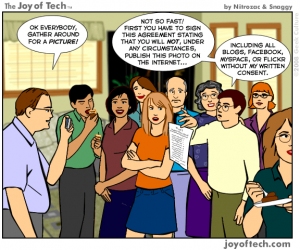 connect with our fellow human beings more efficiently and effectively. But is something lost in the process? Are we becoming different as human beings as a result?
I will argue we are changing, and that interfacing with so many machines and computers is molding us in their image. The values of these technical devices are beginning to trump human values. We tend to value speed, efficiency, accuracy, promptness, and utility over patience, generosity, and empathy. Rather than machines serving mankind, we wind up serving the machines instead, or changing our behavior and ethics to suit their reality. As a result, we admire the latest iPad more than the greatest acts of altruism.
Our country’s recent financial struggles highlight this new digital morality. Rather than being guided by ‘the golden rule’ where we should ‘do unto others as we would have them do unto us’, many of our financial institutions and other businesses take another, more self-serving tack. The credo becomes instead ‘do whatever is legally allowed and that provides the company the greatest benefit/profit’. Computers, designed for efficiency, are implicitly guided by this same morality; the computer’s task, ‘business rules’ and workflow take precedence over a broader question of the impact of that task on the wider world. The narrow, legalistic, rule-based and specialized world of the computer becomes the moral space not only of our businesses, but our lives. Lacking a more holistic view, we are concerned for our narrow, specialized lives and their narrow, specialized concerns. Our morning routines mimic the work flows and processes we strive to perfect at work. We settle into these routines as if to protect us and shield us from something, and become as numb as the machines that do not feel or think about their particular objective. They simply perform the routine, fulfill the task, and repeat.
When we judge, we judge harshly. Software, which will ‘crash’ based on a single typo in a computer program, becomes the emblem of our judgment of others. The recent fall from grace of Representative Weiner is one example. It was a ‘typo’ in a text message that ‘caused the chain of events’ that led to his fall. As such, single failures tend to prove disastrous for otherwise good people. While Representative Weiner may deserve his fall from grace, we take this same kind of morality too far when we judge people based on a single action out of context and do not look at the wider picture. We don’t ask: ‘who is the judge’? Instead, we assume there is some pervasive, mass morality where everyone uniformly dislikes certain behavior and avoids that behavior with puritanical zeal. Is this really the case? I am doubtful. We will find instead that we are all flawed, and none can cast the first stone.
Again, we view people’s actions as software – where the single flaw causes the whole system to crash. But people are not software, and shouldn’t be judged as such. Our jails are filled with people who probably would be better off in rehabilitation, being forgiven and re-integrated into society rather than judged for ‘flaws’ that are as much the result of systemic, societal problems as their own doing.
The machine or computer task, isolated and specialized, becomes the human being, isolated and responsible for their actions, and devoid of context – all while plugged into their digital space. The infallible ‘perfect’ ones who do not fall into the trap of ‘error’ can judge those that commit crimes and are jailed when truth be told, a more humane approach would work better over the longer haul. And this attitude reaches much wider than the criminal and deep into our personal lives. Often these ‘perfect’ ones are not the most empathetic, but the ones with the best credit scores, whose efficiency at paying their bills makes them somehow ‘better’ than the ‘failures’ who have, perhaps due to illness or other misfortunes, allowed their credit ratings to lapse.
We live in rows of houses where neighbors more often than not do not communicate. The suburb becomes not so much a community as a compartmentalized, specialized human chicken coops. With many of these houses financially underwater, the people in them feel more trapped than ever. Terrified of losing their credit rating, they keep on plugging away at the routines of their lives, hoping their will be an exit and praying they don’t fall ill or lose their job.
Our children often interface more with computer games then with other children. The values of these games are of domination, control, and aggression. Cooperation, empathy, and collaboration are the furthest values in mind to the creators of video games. Our children, immersed in a ‘squash the bug’ mentality, take this morality out into the wider world. The answer to all problems is to ‘kill the enemy’ – fix the problem by eliminating the dehumanized ‘other’ who is at the heart of our unhappiness.
Am I being to harsh? I am certainly emphasizing the problems over and above the reality, which is much more diverse and balanced than what I portray here. But I do this to make a point, and I hope you see that the trends I’m pointing out are very real and very much leading us toward a society that could, within a hundred years, be completely unrecognizable as human culture.
Do we want a future of hybrid robot-humans? That is where we are heading. If we want to stop these trends, the only answer to this may not be more and more machine values with their digital morality. The answer may be to rediscover our humanity.
Note: This article was updated in November, 2016 and was originally published in 2010.
When starting nextPix in 2000 one of my personal goals was to form a company that produced and promoted ‘humanistic media.’ Exactly what that means has been a work in progress, as the term humanism itself can take on a variety of meanings depending on who is defining the term.
Humanists, in the traditional sense, are secular in their outlook. They believe that ‘people are the center of all things’ and that scientific rationality, not religion, superstition or spirituality, offer the best answers for humanity’s ills. What I have proposed as defining ‘humanistic media’ is different from the purely secular in that it can and should include what might be called a spiritual or New Humanism as laid out by the late Mario Rodriquez Cobos or the ‘common human values‘ supported by the Dalai Lama in laying the groundwork for World Peace. Moreover, such a humanism can be different from ‘faith-based’ themes that while often inspiring have narrow definitions of what kinds of media messages can and should be purveyed, generally involving the acceptance of a Judeo-Christian god. The tenets of such a ‘New Humanism’ include:
- An acceptance of the intrinsic value of all human beings
- A realization that humanity is interdependent and shares common values
- Understanding that there should be a balance between social and individual needs
- Accepting personal responsibility for the social and physical environment and choosing accordingly
- Seeing non-violence and reconciliation as a world view that can lead mankind toward peace both individually and collectively.
To many secular humanists, this broader definition of humanism is an impossibility. These traditionalists believe humanists should only engage in a rational, scientific process to eliminate the darkness of superstition and religious dogma that has in so many cases burdened humankind. Ideas of spirit do not typically fit within such a framework.
The problem is this. If misinterpreted, a scientific, materialistic perspective can lead to a nihilistic view that sees human value systems as ultimately futile. For science, because people are seen through the lens of physical processes, some conclude no value system exists outside of the desire of humankind to construct it. To the nihilist, morality is not ‘natural’ but may even stand against natural law, which to the nihilist is often simply the survival of the fittest, motivated by a desire to dominate and overcome nature. To these people, power is the only defining element of life; if emotional attachments are allowed, they are generally familial and sentimental. However, the danger of nihilism is that it can and does lead us down the path, eventually, of social disintegration, as the moral dimension is eschewed for a strictly material view and social cohesion based on ethics, morality and the ‘golden rule’ dissolves. To be clear, it usually is not scientists who create these problems, but people who misinterpret science and see science and technology primarily as vehicles for gain.
In our modern era, nihilism often means that we throw the humanist baby out with the religious bath water. Close behind in the dustbin are nuance, the poetic and the beautiful. As we witness nihilism on parade within our recent economic meltdown (2008-2009), and the corruption apparently evident within the halls of finance, we see blatant examples of actions taken without a moral compass to guide them, or that moral compass is simply a legalistic frame where the individual or business man seeks only to adhere to the letter of the law (if we’re lucky), but sees no social obligation to his fellow human being outside of what he can get away with to exploit and/or manipulate people more effectively. Sometimes this exploitation and manipulation is assisted by the clever mis-use of technology. In the extreme, this literally results in an institutionalized pathology. At best, the ‘meaningless becomes meaningful’ as so eloquently stated by one of the interviewees in the documentary film we co-produced with director Ngawang Choephel, Tibet in Song. At worst, corporate psychopaths prevail. If you think I’m making this up, feel free to read this recent article in the Journal of Business Ethics.
But how does this relate to Hollywood and the media? I would relate Wall Street to Hollywood in this sense. Both have constructed machines to make money that, over time, become self-fulfilling and self-generating. Just as some accuse ‘primary dealers’ on Wall Street of gaming an essentially high-tech closed system, so Hollywood Studios might be seen as gaming the system with special-effects laden blockbuster films that cater to a certain audience, trained one might say to think and feel in a certain way and respond to what is often essentially shallow sensationalism and sentimentality. Once trained, this audience returns like lemmings to the next hypnotic film in the lineup. It’s not unlike the Romans and the Coliseum. Was it always like this? No. We have devolved to the current situation over the last thirty years after making some progress in reaction to the immense destruction of World War II.
But is the current situation in media really that bad? To the crowds at the cineplex or millions of TV viewers, apparently not. And unlike the activities of some of our creative financial wizards, at least it is legal. Who am I to spoil all the fun? However, over time, I would argue, there is a cultural corrosion that occurs. Why this occurs is that individuals are trained, from very young, to think and feel within a certain consumer framework that is shallow, selfish, lacks critical thinking, and imbues a general lack of empathy for anyone outside of one’s close ties. Moreover, media messages are generally defined within ‘heroic’ stories that are often a melodramatic mockery of the ideals of the hero as put forth in our Western tradition. Such a perversion of the notion of the hero, such a lack of empathy, such a narcissistic over-concern with the individual self and/or the myopic importance of the nuclear family over and above society as a whole, leads to a society that is unsustainable and will eventually fold in on itself in a dark spiral of self-destruction. If you doubt what I say, read the comments on many blogs. See the lack of empathy for the viewpoint(s) raised. See the anger, the hatred. Is this a society that can survive into the future?
Our young people, enveloped in video games, are urged to continue because, according to studies their skills are increased. Per a recent article on NPR’s website:
“…studies show that video gamers show improved skills in vision, attention and certain aspects of cognition. And these skills are not just gaming skills, but real-world skills. They perform better than non-gamers on certain tests of attention, speed, accuracy, vision and multitasking…”
Not a word here about being a better human being. In fact, the values described above seem more appropriate for a machine. Of course, we don’t value the inefficient and contradictory ‘human’ values; rather, it is the utilitarian ‘skills’ acquired for our businesses and military (obviously what is really important) that we value. And video games are certainly cheaper than college.
As for the movies, what may not survive our urge toward utilitarian values is the type of independent film that, as of late, generally expresses humanistic ideals. If funding becomes more difficult for independent film, humanistic voices in media will become fewer and fewer, at least in the mainstream media. And when we see humanistic messages, they are more likely to appear, ironically, in the cartoons from Pixar and Disney. All the better for Wall Street, because these images cannot be generated cheaply and must be controlled by major corporations. Human qualities are apparently expensive to create and only commercially viable when people are turned into digital avatars.
So what would be anti-humanist in its content? In my mind, any film or story that promotes a villain or the ‘other’ as a ‘bug to be squashed’, while fun to the adolescent video gamer, may not be the best model for adult humanistic storytelling. But since our adolescent audiences are often key to modern cineplex, modern villains and the notion of a mythical evil that can be ‘terminated’ or ‘removed’ so that others can be ‘happy’ (translated to bonding sentimentally with their tribe) leaves us open, in my mind, to a fascistic mindset where we need an ‘enemy’ to unite us, be that a Jew, an Islamic terrorist, an Alien from another planet, an Orc in Middle Earth, or (for the Chinese government) a Tibetan Nun in a prison camp. In our politics, the political ‘other’, whether on the left or right, takes on the same anti-humanist attitude, with the hatred stemming from both sides reflecting no empathy whatsoever.
Perhaps this is just the nature of things. Perhaps I am too utopian and naively optimistic in the hope that people can and should live with empathy for one another, to have mutual respect for one another, and to value each human being equally. In other words, to see ourselves in the eyes of the other and to have a culture that expresses those ideals. While I might seem a little serious, these are serious times. Perhaps even too serious for films to really matter any more – although I continue to hope that’s not the case. I’d like to think good films matter now more than ever. Our recent (2016) political turmoil tends to back this up.
I’ve attached below a link to a great blog debate by Dr. Cornel West and Dr. Robert George (both professors a Princeton) that, in my opinion, lays out the arguments for a spiritual (in this case Christian) humanism. There could also be a Buddhist Humanism and a Jewish Humanism and an Islamic Humanism. My point is not to covert, but to show the potential within human consciousness to come to a conciliatory stance that looks toward compassion, not endless conflict, as the answer to human ills.
I urge media people to consider these ideas and the give and take between the media and the mass audience. I urge media providers to have a sense of social responsibility to those that they promote their messages to. I urge us to move beyond an us/them framework and toward a ‘we’ framework that supports both justice and reconciliation – and will therefore support tolerance and forgiveness – a forgiveness that moves beyond the merely sentimental to the compassionate.
If we do not support this kind of media, be that within our news, our films, our books or our video games, we will continue to see society erode to the point where no compromise is possible, no unity is possible, and only force and fear are recognized as organizing principles of society. Some people in our society might like it that way, but they are not wise in their conclusions.
In my estimation, we must obtain wisdom, and we as media providers can put into the mix of our media messages those that support justice with reconciliation and do not perennially polarize us into camps that cannot agree and cannot move forward into the future. While some may argue that ‘heroes and villians’ are the best framework for storytelling, there are numerous examples of humanistic film that have conflict but do not promote a simplistic us/them viewpoint of the world. Some of the films we consider humanistic can be found here.
Also, here is the link to the Cornel West/ Robert George debate. Dr. West explores some ideas and themes regarding ‘non-market values’ similar to those outlined in my play Tibet Does Not Exist as well as the nature of compassion as set forth by the Dalai Lama. You might also read the comments to the George/West debate, as they illuminate the head wind that any serious discussion of these topics can encounter. I personally would try to give the ideas a chance and listen, as academic and spiritual leaders like Cornel West and the Dalai Lama provide ideas that can offer an alternative to the endless wars, economic and social injustice, and lack of unity that we find today. Taken into media and art, they provide an alternative to nihilism, cynicism, and general lack of faith in our common future and instead give us a much-needed vision of hope.
===
D.R. (Don) Thompson is a producer, playwright and essayist. This essay and others are included in his new book, A World Without War (Del Sol Press).
 SolPix Blog